
Fairer, Healthier Liverpool organisation accreditation
Liverpool is a Marmot City. This recognises the city’s commitment to tackling health inequalities and improving the conditions in which people are born, grow, live, work and age.
The Marmot City accolade was presented by Professor Sir Michael Marmot in April 2025. While this was an important milestone, it is only the start of Liverpool’s journey. To continue strengthening local efforts, Fairer, Healthier Liverpool (FHL) is co-developing a network of accredited organisations.
What FHL Organisations are committed to
Health foundations
Understanding that health is shaped by where people are born, grow, live, work and age, and taking action to improve these conditions.
Promoting equity
Working to reduce health inequalities and promote social justice so everyone has a fair chance at a healthy life, supported by evidence of impact on access, outcomes or participation.
Working together
Actively contributing to the Fairer, Healthier Liverpool Partnership and working with public services, voluntary organisations and community groups to achieve shared goals.
Evidence based
Action and impact
Delivering practical interventions, strengthening local health equity systems and demonstrating the impact of this work.
Accreditation this year
At the Fairer, Healthier Liverpool Celebration Event, held on Thursday 21st May at The Florrie Community Centre, partners from across the voluntary, community, faith, social enterprise (VCFSE) and public sectors came together to mark one year of collective action and progress.
Organisations achieving accreditation
The following organisations were awarded Fairer Healthier Liverpool Accreditation, recognising their leadership and commitment to improving the building blocks of health:
- Rotunda
- Liverpool John Moores University
- End Furniture Poverty Foundation
- Alder Hey Charity
- Alder Hey NHS Foundation Trust
- Torus Foundation
- Merseyside Play Action
- Citizens Advice Liverpool
- Liverpool Learning Partnership
- Liverpool Access to Advice Network (LATAN)
- Merseyside Polonia
These organisations have demonstrated a strong commitment to embedding the Marmot principles in their work, helping to create fairer opportunities, stronger communities, and improved health outcomes across Liverpool.
Organisations recognised for progress
Event highlights
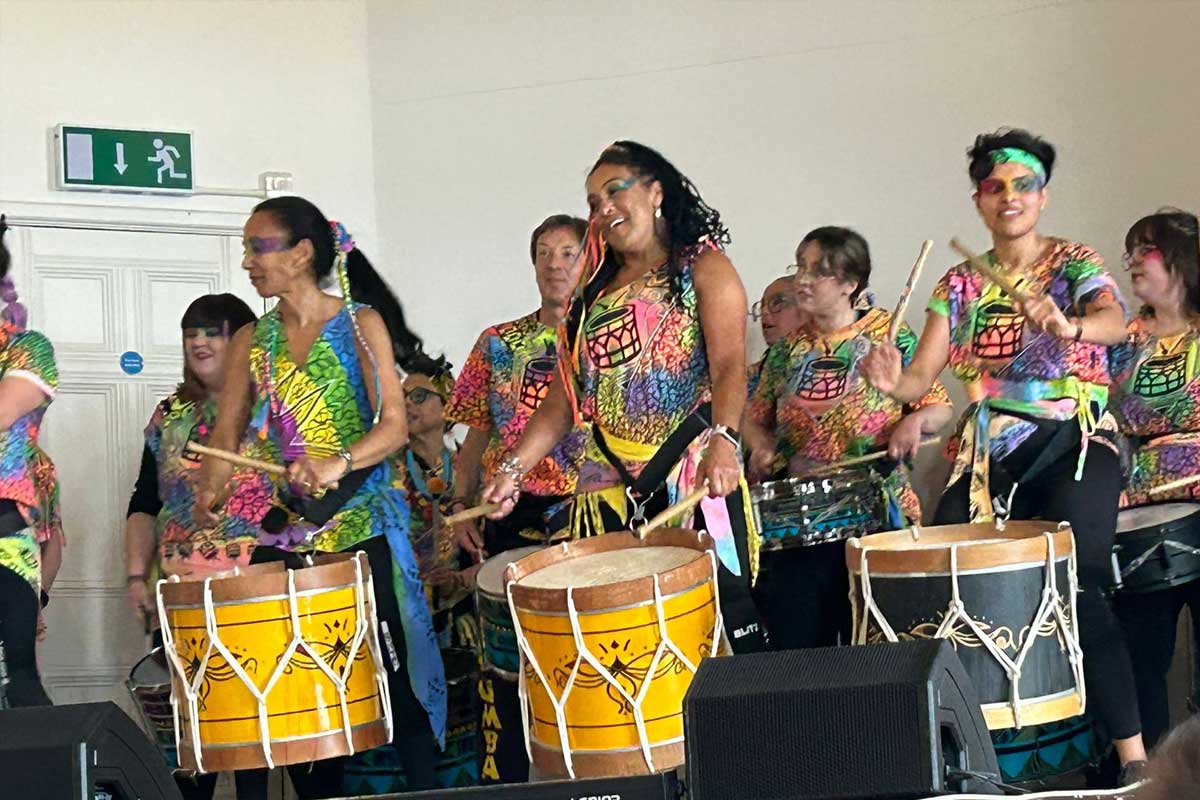
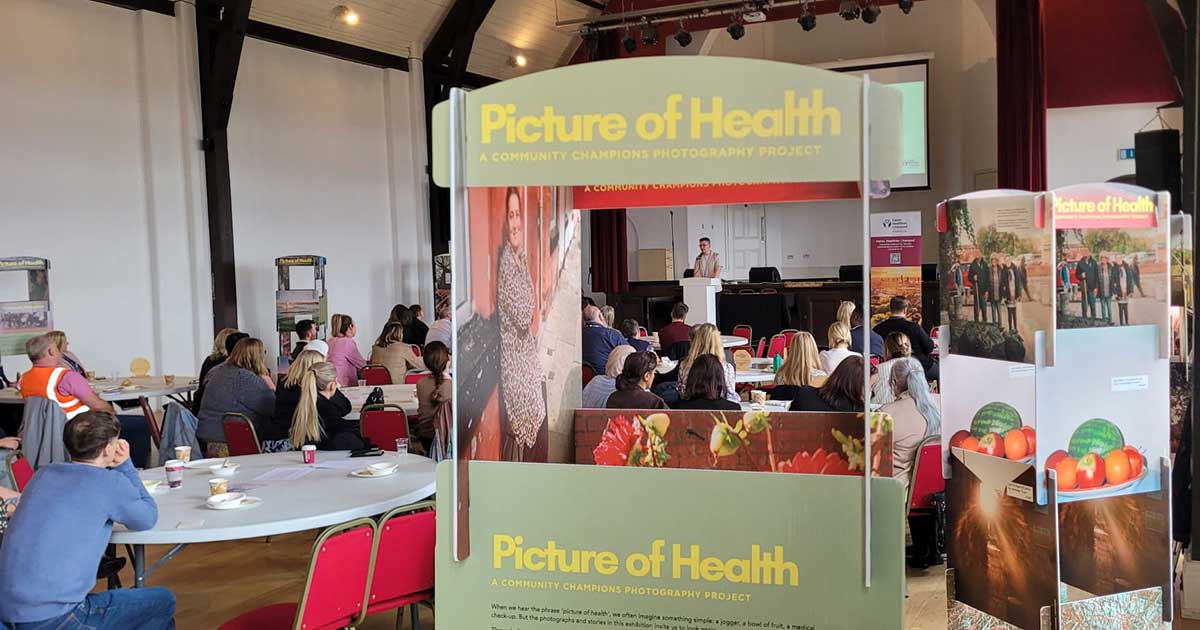
The celebration event included performances from Radist (meaning “Joy” in Ukrainian) a Ukrainian dance ensemble and a high energy performance from Katumba, an incredible group of drummers from across the city. There was also another opportunity for people to experience the Picture of Health photography exhibition a co-produced photography project with Community Champions and volunteers that captures real-life perspectives on what health means.
Event videos
To hear from a range of Fairer, Healthier Liverpool partners, including some of the accreditation winners, please view our videos.
Partner video
Video Transcript
[Start card: Fairer Healthier Liverpool logo]
[0:01] Speaker from Central Liverpool Primary Care Trust: Personally, I’ve always been a fan of Marmot and I have studied his work through my work in community health in the past and I feel really privileged to be part of this work through the PCN in Liverpool.
We represent 6 practices in central Liverpool to try to support good health, well-being and work in a preventative way.
We work very proactively with our partners in the community. Those relationships are the foundation of breaking down some of the barriers and improving the lives for our most disadvantaged communities and that’s what I’m most proud of.
[0:37] Speaker from Merseyside Polonia: Being given accreditation of the Fairer Healthier Liverpool for all award is amazing and we are so excited that we get to be part of such an amazing network of people who are bringing so much to Liverpool. Merseyside Polonia is a third sector organisation that’s been delivering community-led events since 2009, addressing various issues, health inequalities but also promoting our culture and our shared heritage.
The Community Champions project is really something that we are very proud to be part of. It allows us to bring more people from the community into our organisation and then support our volunteers in developing their capacity and addressing inequalities that are not just impacting the Polish community but impacting a wider community here in Liverpool.
[1:15] Speaker from Torus Foundation: Being part of Fairer Healthier Liverpool means great deal to Taurus Group and Taurus Foundation in particular.
We’re proud to support the outcomes that we can achieve as a collective. Our work at Taurus Foundation is centred around the Marmot principles. In particular, we want to address health inequalities, prevent people from falling into poverty and helping people out of poverty. We do that in five main ways. We have a financial inclusion team, a digital inclusion team, an employment and skills team, health and well-being team, and we’re here today in our youth and community hub in Toxteth called Firefit.
[1:51] Speaker from Torus Foundation: One of the things that I’m most proud of is our ability to provide a hot, nutritious meal.
At Taurus Foundation’s Firefit hub, we provided 14,000 free hot meals to young people last year, which has a massive impact on this community, both on those young people and their families.
It reduces their financial burden, but we know the importance of a hot meal in terms of health and in terms of some of the wider impacts on education and beyond.
[2:15] Speaker from St Andrews: We’re a place based anti-poverty charity working across North Liverpool supporting people who are navigating some of the most challenging moments in their lives. We exist to ensure that when people hit crisis, they’re met with dignity, with practical support and with a pathway forward.
Last year alone, our advice services supported people to access over 1.5 million in financial gains. Money that should have been in their pockets in the first place.
People don’t wake up thinking I need a debt advisor, they’re overwhelmed. So we developed Angels Connect, a digital triage and referral platform that acts as a front door in to support.
It allows trusted people in the community to walk alongside someone at their moment of crisis, to understand what’s going on and then to connect them directly to the right help. And that’s key to a fairer, healthier Liverpool, strengthening the connections between the services. You can’t build a fairer, healthier city by responding to crisis alone.
[3:29] Speaker from LATAN: Liverpool has a really rich third sector, but a lot of people are doing very different things and they’re supporting very diverse communities who make them from one specific place in Liverpool. So there’s a lot of work being done around big social issues, but there’s not a lot linking them up. And that’s where our campaigning work is really powerful.
What we were able to do is to be able to bring together lots of different perspectives and to put them in one place and to send that to the government and to talk about it to local representatives, to make sure that those really, really marginalised voices were put at the same level as really big organisations. And it’s really important that we’ve got a space to be able to come together to talk about the big issues that are happening. And that is what we do at Fairer Healthier Liverpool. It allows us to represent the views of all of our members in a way that it means that their voices can actually change things in Liverpool. Whoever you are, whether you’re a volunteer, whether you’re a CEO, whether you’re a trustee, whether you’re an advice worker, whether you’re a support worker, your contribution really matters and it’s having an effect on what Liverpool is like to live in and to experience and that’s really powerful.
[4:32]
Speaker from Food for thought: We are a not-for-profit school meals company owned by its partner schools and we return all of our profits each year back to them.
In the last three years we’ve returned £1,000,000 back to 85 schools.
The work that we do supporting food literacy and food education supports children to learn about where food comes from and also enjoy good food at lunchtime. But Food for thought being part of the partnership is integral for making a fairer, healthier Liverpool for everybody.
[4:57] Speaker from Alder Hey: I think the accreditation is fabulous. So Alder Hey is one of the busiest children’s hospitals in Europe. We treat roughly half a million children each year. As part of that, we have a real mission to create that happier, healthier and fairer future for children and young people.
We’re looking at children and their longer term futures. If children can stay in school, if they can gain employment, if we can help them to be confident in what they do, that’s going to improve their life chances.
In the Academy we have a piece of work called Inspiring Futures, providing work experience, supported internships, providing coaching, employment insight work.
We do so much with our partners. None of this we do by ourselves and I think for us, getting the accreditation gives profile to what we do and that’s really important. People think of Alder Hey as an amazing place for clinical care, but actually our ability to impact children’s lives and futures is so much more than that. Also, having the accreditation just gives that real recognition.
[5:55] Speaker from Alder Hey: So we’re incredibly proud to have been given Marmot accreditation and one of the pieces of work that really showcases that is the well-being hub here at the hospital.
Families can come here at some of their darkest times. All they really want to do is focus on their children. What financial pressures, social isolation or other pressures can really get in the way of that And sometimes they don’t know where to turn.
And I’m really proud to say that in the 1st 18 months the well-being Hub has helped families to get over £1,000,000 worth of income support and also introduce them to 500 different organisations to get the help and support that they need.
[6:29] Speaker from Citizens Advice Liverpool: Citizens Advice has been supporting local residents for over 80 years in this city. The majority of people we support will be living in low income households. The majority of them will often be in poor health due to the living conditions, so we know that up to 80% of our health is shaped by the wider determinants and the structure of this programme gives us access to the people who were disproportionately affected by them.
Being part of this accreditation process has been really important. It’s a way of demonstrating the vital role that the third sector plays in reducing health inequalities and helps to show the alignment between the Marmot principles and the work that’s actually happening on the ground in our communities every day to ensure a healthy standard of living.
[7:19] Speaker from End Furniture Poverty: Everybody deserves a home and that means a home with all the essential furniture and appliances and not just an empty box. The work that we do nationally make a house a home, really has its roots here in Liverpool.
Through the work we did with the Fairer Healthier Liverpool Partnership and with the public health team to bring all of the local social landlords together to talk to them about how their tenants were living, but to also ask them to pledge to furnish at least 10% of their homes.
We also then created a furniture rental scheme and I’m really pleased to say that nearly all of the landlords in Liverpool have now started a furnished tenancy scheme. We work across the UK with lots of other local authorities. Liverpool truly does stand head and shoulders above the rest with the work that it’s doing here and having the Marmot accreditation is really important to us. It’s encouraged us to focus more on the impact on health and well-being of furniture poverty and it gives us much more credibility for the work that we do, so it’s been incredibly valuable for us.
[8:14] Speaker from Liverpool Learning Partnership: Liverpool Learning Partnership is an independent charity that was set up in 2012 to improve outcomes for children and young people. We work with all schools across Liverpool on a range of priorities including mental health, well-being and improving access to arts, culture and to literacy.
[8:31] Spesker from Liverpool Learning Partnership: So one thing we’re really proud of is the whole school approach to mental health that we’ve developed across the city.
It’s everyone’s business, Mental health is everybody’s business and it doesn’t just fall down to one person within any education setting.
So within that we’ve developed training people, voice sessions, we’ve worked with parents and carers, we’ve worked for staff well-being so that everybody plays a part to embed a culture where mental health is everybody’s business within schools.
[8:53]
Speaker from Liverpool Learning Partnership: Being part of Fairer, Healthy Liverpool has provided us with an opportunity to work with a wide range of diverse partners who are all dedicated and committed to improving outcomes for children, families and communities.
9:07
Our work fully aligns with the Marmot Principles and we’re proud to be a partner organisation.
We’re delighted that our work has been acknowledged and we will continue to deliver meaningful projects that make a real difference.
[9:21] Speaker from Liverpool John Moores University: Liverpool John Moores University traces its history back over 200 years, so it’s been serving the people of this city for a long time.
We’re really delighted that the university has been recognised for its work and has received this accreditation. I’ve been enthused by the belief that we can make a difference by coming together.
Our academics are inherently committed to this idea of a fairer and healthier society and the research topics they choose and they frame individually conflict and desire.
[9:51] Speaker from Micab Liverpool: Micah Liverpool is a social justice charity and we have a focus on food poverty, putting people into employment and childcare poverty.
What we’re trying to do is create community spaces where everybody is welcomed, where there’s a sense of fairness, there’s an opportunity to tell their stories. People can feel less isolated by coming along. Being part of the Fairer, Healthier Liverpool Partnership is really important.
Micah’s principles are about justice, fairness and well-being. We can’t support people on our owns. We’re keen to share. We want to work with others, play to each other’s strengths and expertise really.
[10:33] Speaker from Rotunda: So Rotunda is an anchor organisation of our main purpose is social regeneration from our college where we provide inclusive education opportunities to our nation preschool where we provide funds and places.
It’s the work that we’re extremely proud of is our support provision that gives every child the best start in life, comes right the way through from our nursery and preschool all the way through to our forest school.
We also do our half term provision and we give them breakfast and lunch and a chance to explore our environment. It means the world. It’s a fantastic opportunity for us to collaborate citywide with other local organisations that share our values.
[11:10] [End card: Liverpool City Council logo]
Event celebrations
Video Transcript
[The video opens in a large, bright hall with high ceilings and wooden beams. Rows of red chairs face a stage at the front, where a projection screen displays the “Fairer Healthier Liverpool” logo. A banner with the same logo and a QR code stands on the left side of the stage.] (Non-speech audio description)
[0:01] A group of young women in traditional Ukrainian folk costumes (embroidered blouses, colourful skirts, and floral headdresses) perform a choreographed dance on stage. (Non-speech audio description)
[0:04] The scene cuts to a brief shot of attendees in the audience area. A woman with blonde hair looks at a poster titled “Picture of Health”, while a man wearing glasses and a dark sweater speaks to someone nearby. (Non-speech audio description)
[0:06] The camera pans across the audience and stage, with a presentation slide visible on the projector screen. (Non-speech audio description)
[0:09] A woman stands at a podium and speaks into a microphone. She is wearing a black long-sleeved top and dark trousers with a red stripe, and gestures with her hands as she speaks. (Non-speech audio description)
[0:11] A group of performers wearing colourful tie-dye tops and black bottoms take to the raised platform and play drums with energy and enthusiasm. (Non-speech audio description)
[0:16] The audience, seated in rows, claps along rhythmically. (Non-speech audio description)
[0:23] A large group of people, some holding awards, pose for a group photograph on the stage. The “Fairer Healthier Liverpool” logo is displayed on the projector screen behind them. The camera zooms out slightly to capture the full group. (Non-speech audio description)
[0:33] End card: The video ends with the Liverpool City Council logo, a stylised bird above the text, displayed on a plain light blue background.
Welcome from Sir Michael Marmot
A message from Sir Michael Marmot to recognise Liverpool’s progress one year on:
Video Transcript
[0:02] Speaker: Sir Michael Marmot, Founder of Marmot Principles – This celebration in Liverpool is a special occasion.
[0:08] I can’t tear myself away from the ghastly news. And it is ghastly.
[0:15] The unaccountable conflict, war excursion, whatever you want to call it, in Iran and the Middle East is ghastly because of the carnage, the people who’ve been killed.
[0:32] And it’s ghastly because of the impact on everybody globally.
[0:40] And you put that together with the difficulties that we were having nationally and that many other countries were having nationally, with our health, with our standard of living, with our support for the most marginalised people in society.
[0:57] It’s all awful.
[1:01] And yet Liverpool is celebrating, and rightly so.
[1:07] A year of being a Marmot city. For me, these Marmot places are bright lights in our firmament.
[1:22] Last autumn we had a breakfast meeting with the Metro Mayor Steve Rotherham and Louise Giddens.
[1:32] They had the Local Government Association, and I said I had a nightmare.
[1:41] My nightmare was that some young academic was going to write a paper and say these Marmot places don’t do anything, Steve Rotherham said.
[1:55] Is that your worst nightmare? Let me tell you some of my nightmares.
[2:01] But you send that young academic to me, I’ll show him how many more children are bedding down at night in warm homes.
[2:15] I’ll show him how many more young people are in training education for skills.
[2:24] I’ll show him what we’ve done to bus fares so people can commute into the centre of Liverpool and gain employment and I would say I’ll take it further.
[2:40] I’ll show him the commitment of local organisations in Liverpool, the enthusiasm with which people are addressing real deep-seated problems of inequality, deprivation and the consequence ill health.
[2:59] But on my visits to Liverpool I don’t get a sense of oh this is all too difficult.
[3:07] The sense I get is we’re absolutely committed to making a difference, to improving the quality of people’s lives, to getting out of our silos and working together in partnership.
[3:25] I’d like to think that working with Liverpool as a Marmot City and before that All Together Fairer in Cheshire and Merseyside, has given a framework, has given a mission, is given a purpose to doing what you do and what you do so well.
[3:49] I’ve learnt enormous amounts from my visits to Liverpool on how to take people’s lived experience as evidence for what needs to be done and doing it in a way that fits with people’s lived experience.
[4:12] I quote Liverpool, I quote Cheshire and Merseyside when I talk elsewhere because they are examples of working across sectors, of working with enthusiasm and commitment to make a real difference to the conditions in which people are born, grow, live, work and age.
[4:40] To the social determinants of health to meet the ambition to make Liverpool quite the best place to live in the United Kingdom.
[4:52] Congratulations.
[4:56] [End card: Liverpool City Council logo]
Key messages
“Tackling inequalities is a key priority within our Council Plan and central to our ambition to create a fairer and more inclusive Liverpool. It’s fantastic to see so many organisations being recognised for their contribution to this shared goal.”
~ Councillor Ruth Bennett, Deputy Leader of Liverpool City Council
~ Councillor Harry Doyle, Cabinet Member for Health, Wellbeing and Culture
~ Professor Matt Ashton, Director of Public Health for Liverpool
Interested in applying to become a FHL accredited organisation?
Fairer, Healthier Liverpool (FHL) Organisations are committed to tackling health inequalities and improving the building blocks of health in Liverpool. They are guided by the evidence-based Marmot Principles, and focus on creating healthy, sustainable communities.
Following the success of the event, the accreditation process will be evaluated to inform future development and expansion. The growing network of accredited organisations will continue to set the standard and inspire wider action.
The programme will reopen for new applications in early 2027, and dates will be announced on this page. For further information, please contact publichealth@liverpool.gov.uk